
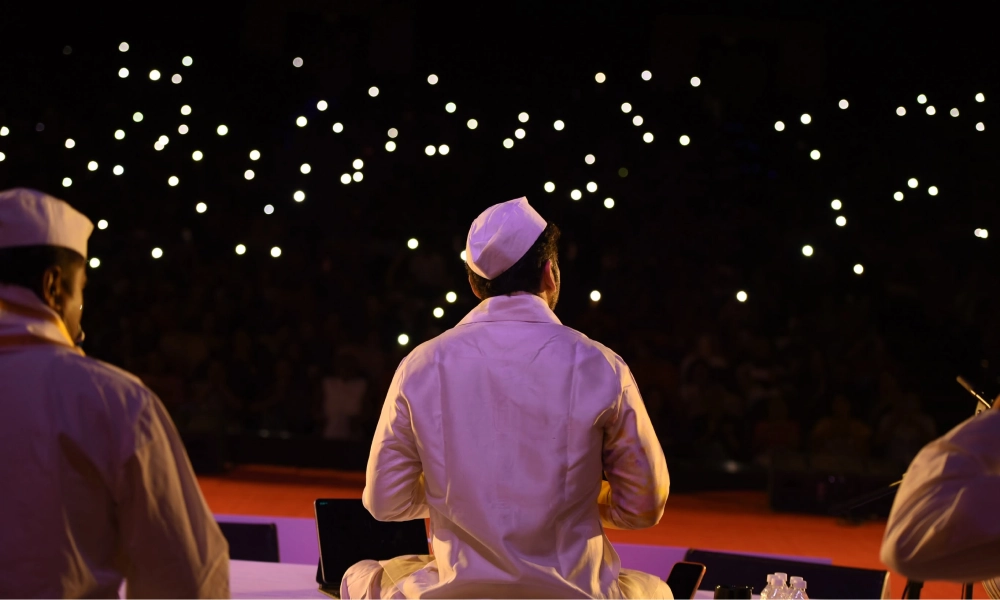
In 2026, Abhangawari was more than just a musical tour. It turned into a traveling celebration of abhangs, bringing the sound of Vitthal bhakti to different cities and making each show a shared experience of music, devotion, and emotion.
This year, Abhangawari traveled to 13 cities, reaching people in places like Pimpri-Chinchwad, Indore, Hyderabad, New Delhi, Bengaluru, Amravati, Nagpur, Mumbai, Nashik, Pune, Ahmedabad, and Vadodara. Seven of these cities had packed shows, showing that the abhang tradition is still loved by people of all ages and backgrounds.
Abhangawari 2026 stood out because it balanced three key elements: bhaav, melody, and bhakti. The music was polished like a concert but had the heart of a prayer. The abhangs were not just performed formally—they were shared with meaning, emotion, and closeness. Each piece reflected the Warkari tradition and felt fresh and alive for everyone in the audience.
Rahul Deshpande’s performance was at the heart of this experience. His singing combined classical skill, thoughtful lyrics, and true devotion. He didn’t add too many flourishes or turn the abhangs into simple crowd-pleasers. Instead, he found the right emotion in each song. The notes were clear, the melody felt natural, and the bhaav always stood out.
His voice brought the words of the saints to the audience with rare clarity. The poetry of Sant Tukaram, Sant Dnyaneshwar, Sant Namdev, and Sant Eknath didn’t feel old or formal. It felt personal and present, like a real conversation between the devotee and Vitthal. That’s what made the performance so moving.
In every city, the audience’s reaction showed how deeply the music connected with them. Sometimes, there was complete silence as people listened closely to the abhangs. Other times, there were spontaneous claps, smiles, and people joining in when familiar lines came up. Often, the hall felt less like a venue and more like a shared devotional space. The name of Vitthal moved from the stage to the audience, and the audience responded with warmth.
This was what made Abhangawari 2026 special. It didn’t just present the abhang tradition—it invited people to become part of it. The tour showed that abhangs are more than music. They are emotions to feel, poetry to remember, and devotion to experience. In Rahul’s performance, melody was the path, bhaav was the language, and devotion was the goal.
For those who were there, Abhangawari 2026 was more than just a concert. It was something they took part in. They left with the sound of the abhangs, the quiet moments, the joy of sharing with others, and the strong feeling of Vitthal’s presence.
For those who missed it, the tour offers a clear invitation. Abhangawari can’t really be understood through photos, short videos, or social media. You have to experience it live, in the room with the audience, when the first note begins, when Rahul’s voice starts the abhang, and when bhakti slowly fills the space.
When the 2026 edition ended on Ashadhi Ekadashi, Abhangawari left a strong message: traditions stay alive when people experience them, not just keep them. Over 13 cities and seven packed shows, the abhang reached new listeners, longtime devotees found new joy, and the name of Vitthal once again connected the stage and the heart.